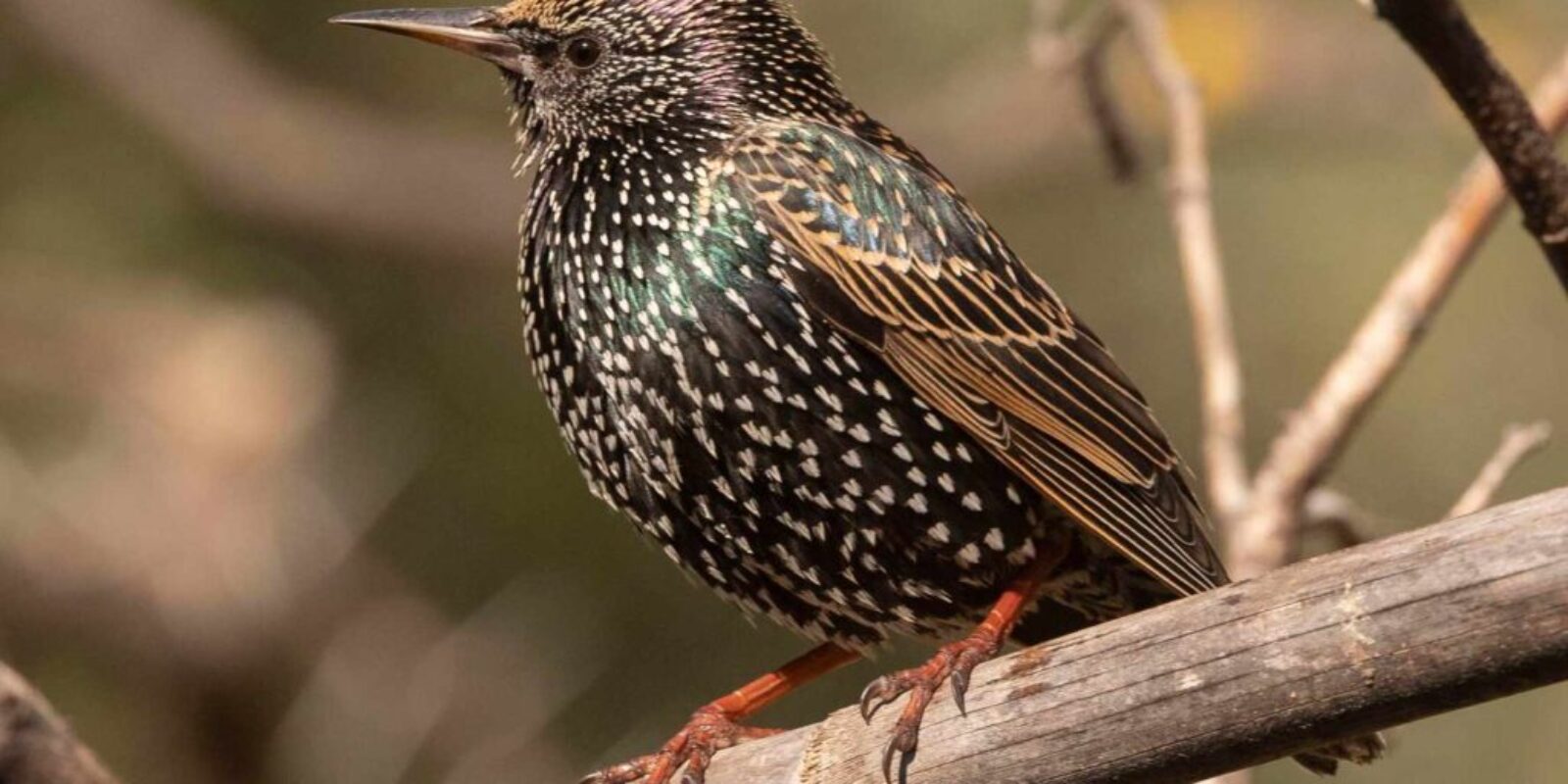
The Common Starling is one of Britain’s most distinctive and charismatic garden birds, recognised for its glossy iridescent plumage, speckled feathers and impressive mimicry skills. Often seen arriving in lively flocks or performing spectacular winter murmurations, starlings bring movement, sound and personality to gardens, parks and urban spaces throughout the UK. Social, intelligent and endlessly entertaining, the starling remains a fascinating favourite among bird lovers.
Common Name: Common Starling
Scientific Name: Sturnus vulgaris
Bird Family: Sturnidae (Starlings)
Size: 19–22 cm
Wingspan: 31–44 cm
Weight: 60–100 g
UK Status: Resident (with winter migrants)
Primary Habitat: Towns, farmland, gardens, woodland edges
Diet: Insects, worms, fruit, seeds
Lifespan: 2–5 years
Conservation Status: Red (UK Conservation Concern)
Best Seen: Year-round, especially winter roosts
Garden Friendliness: ⭐⭐⭐⭐⭐
General Information
The Common Starling is one of Britain’s most remarkable birds, combining shimmering plumage, complex vocal mimicry and breathtaking aerial displays. Up close, its dark feathers are speckled with pale spots and glossed with iridescent greens and purples that shine in sunlight.
Starlings are famous for their extraordinary winter gatherings known as murmurations, where thousands of birds move in synchronised, swirling patterns across the sky before settling to roost. These displays are among the most spectacular wildlife events in the UK.
Highly intelligent and endlessly vocal, starlings can mimic other birds, mechanical noises and even human sounds. Despite their energy and abundance in some areas, their numbers have declined significantly in Britain, placing them on the UK Red List and making garden sightings more valuable than ever.