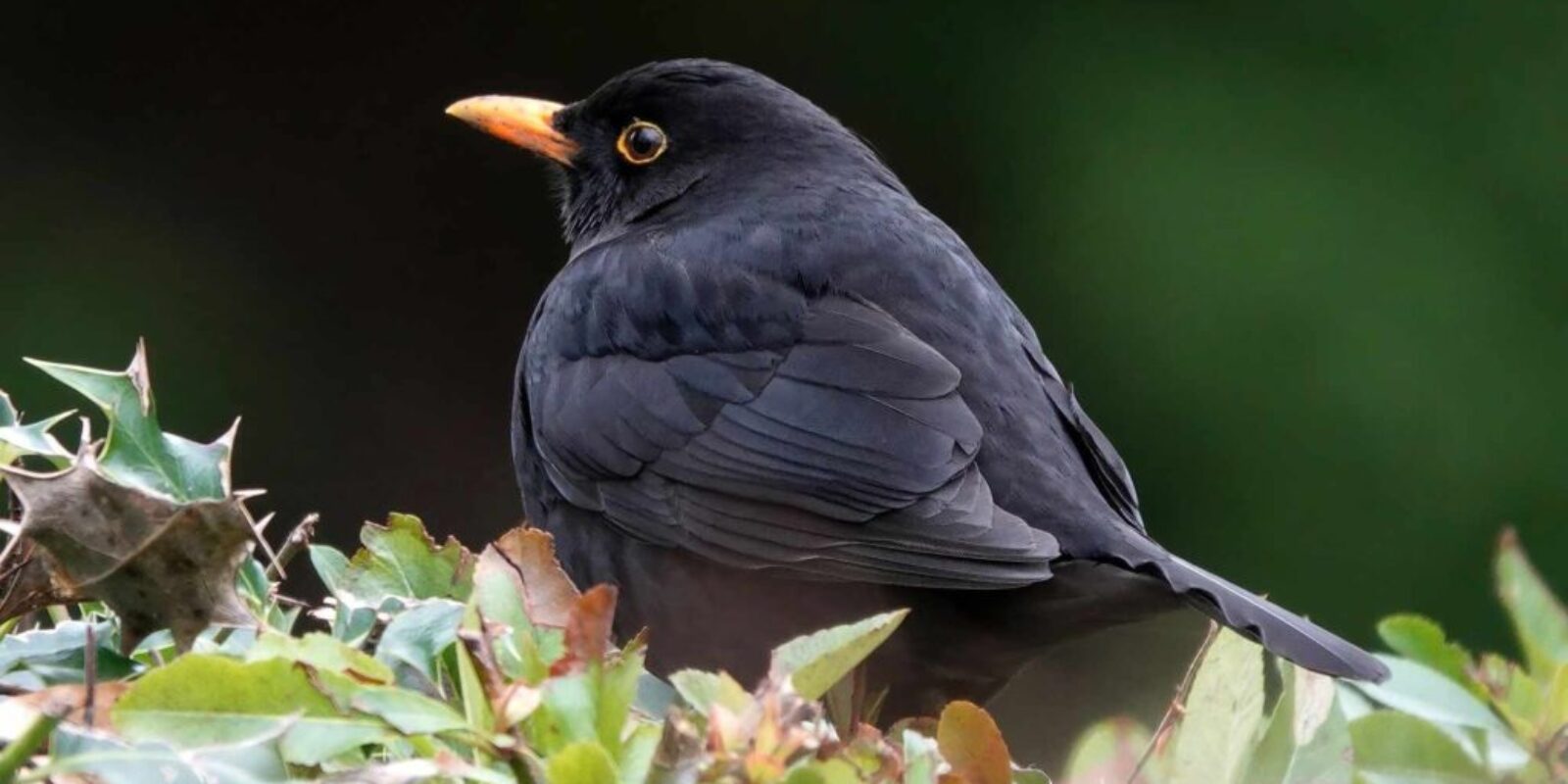
The Common Blackbird is one of Britain’s most familiar and much-loved garden birds, known for its rich golden beak, glossy black plumage and beautifully melodic song. Often spotted hopping across lawns, turning leaves for worms or singing from rooftops at dawn and dusk, this elegant thrush is a year-round favourite in gardens, parks and hedgerows throughout the UK. Its beautiful song and confident presence make it a true icon of British birdlife.
Common Name: Common Blackbird
Scientific Name: Turdus merula
Bird Family: Turdidae (Thrushes)
Size: 23–29 cm
Wingspan: 34–38 cm
Weight: 80–110 g
UK Status: Resident (Year-round)
Primary Habitat: Gardens, parks, woodland, hedgerows
Diet: Earthworms, insects, berries, fruit
Lifespan: 2–5 years (longer possible)
Conservation Status: Green (Least Concern)
Best Seen: Year-round, especially spring
Garden Friendliness: ⭐⭐⭐⭐⭐
General Information
The Common Blackbird is one of the most familiar and melodious birds in Britain. The male is unmistakable — glossy black plumage paired with a bright orange-yellow bill and eye-ring — while the female is a softer brown with subtle speckling.
Renowned for its rich, fluting song, the blackbird is often heard at dawn and dusk during spring, delivering one of the most beautiful soundtracks in the British garden. Its confident stance on lawns as it hunts for earthworms makes it a constant presence in parks and back gardens alike.
Equally at home in towns, countryside and woodland edges, the blackbird has adapted remarkably well to human environments. Its powerful voice, striking appearance and year-round visibility firmly place it among the UK’s most loved birds.