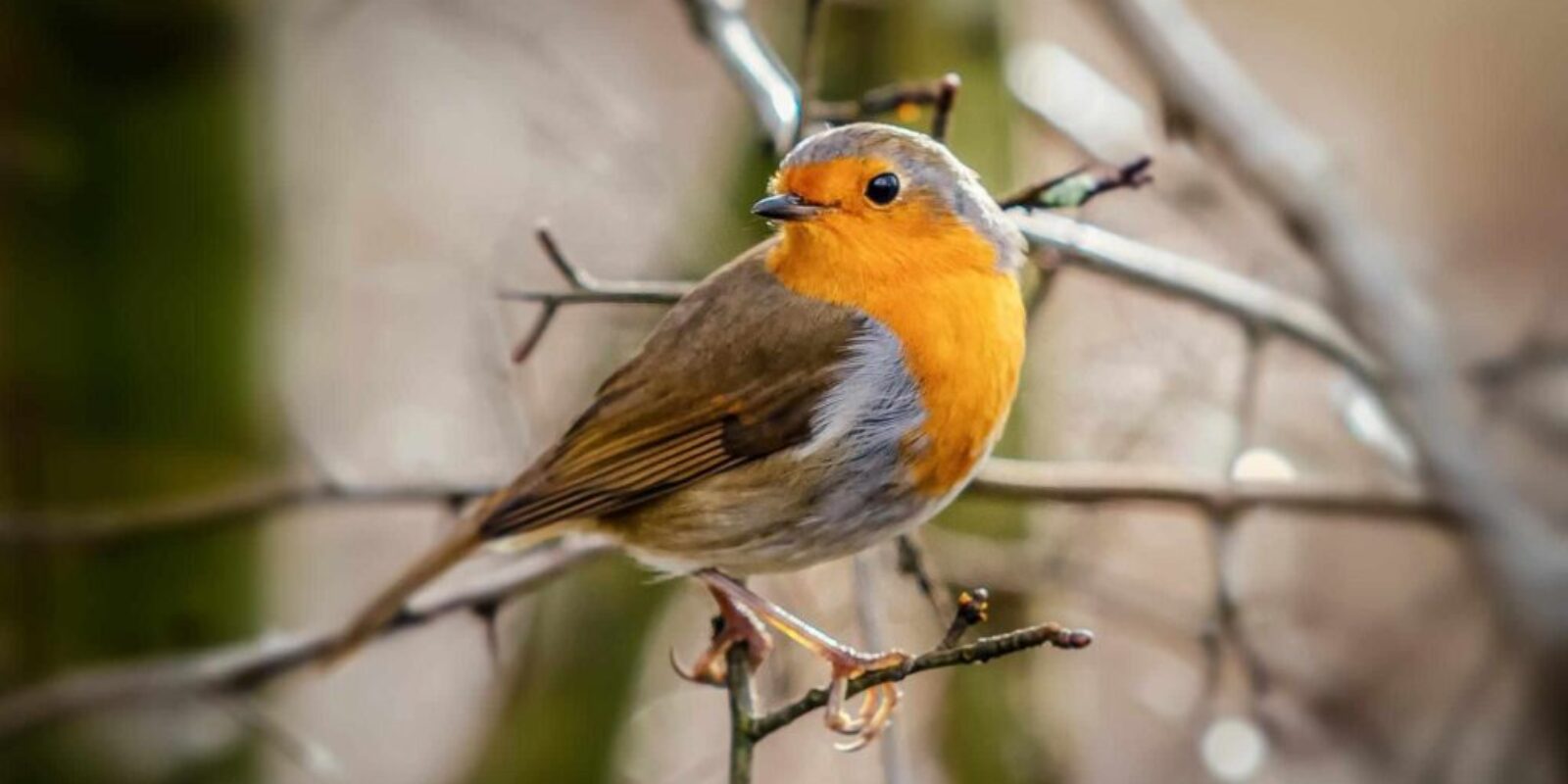
The European Robin is one of Britain’s most iconic and best-loved garden birds, instantly recognised by its bright orange-red breast and curious, friendly nature. Often seen perched on fences, hopping across garden paths or following gardeners in search of insects, this small songbird has become a familiar symbol of British gardens and festive winter scenes. Bold, charming and full of personality, the robin remains a favourite among birdwatchers and nature lovers throughout the UK.
Common Name: European Robin
Scientific Name: Erithacus rubecula
Bird Family: Muscicapidae
Size: 12.5–14 cm
Wingspan: 20–22 cm
Weight: 14–21 g
UK Status: Resident (Year-round)
Primary Habitat: Gardens, woodland, hedgerows
Diet: Insects, worms, berries
Lifespan: 1–3 years
Conservation Status: Green (Least Concern)
Best Seen: Autumn & Winter
Garden Friendliness
General Information
The European Robin is Britain’s most recognisable garden bird and one of its most cherished. With its warm orange-red breast and inquisitive nature, it confidently hops close to gardeners, often following in search of freshly unearthed worms.
Unlike many songbirds, robins sing throughout the year, including deep into autumn and winter. Their clear, silvery song carries across frosty mornings when other birds fall silent. Despite their small size, they are fiercely territorial and will boldly defend their patch.
A familiar feature of Christmas cards and winter folklore, the robin holds a special place in British culture. From urban gardens to woodland edges, this charismatic little bird remains a constant and welcome presence across the UK.