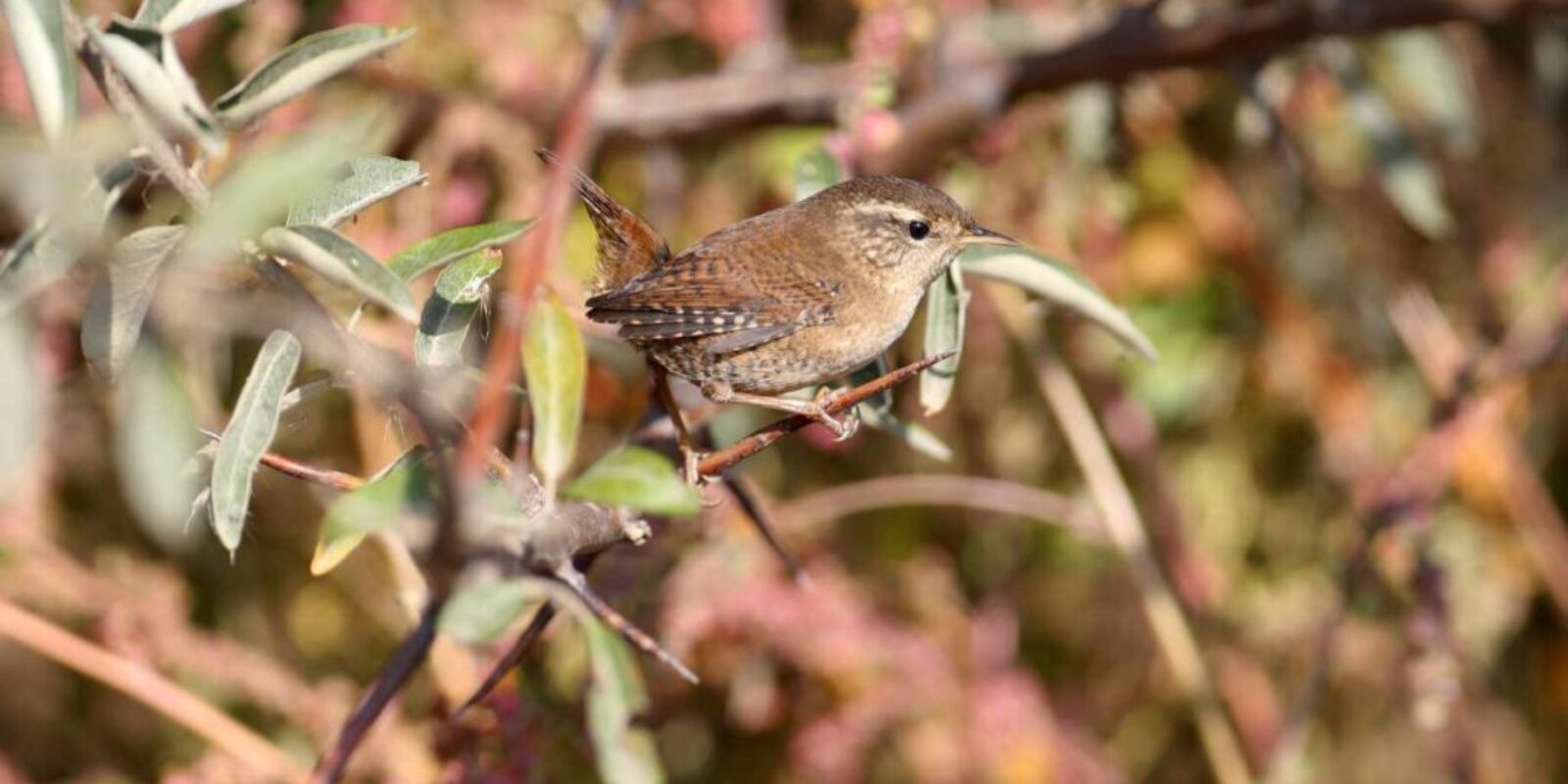
The Eurasian Wren is one of Britain’s smallest yet most remarkable garden birds, famous for its tiny round body, upright tail and surprisingly powerful song. Often seen darting through hedges, shrubs and woodland undergrowth, this energetic little bird is full of character despite its modest size. Its warm brown plumage and lively behaviour make the wren a charming and much-loved visitor to gardens across the UK.
Common Name: Eurasian Wren
Scientific Name: Troglodytes troglodytes
Bird Family: Troglodytidae (Wrens)
Size: 9–10 cm
Wingspan: 13–17 cm
Weight: 7–12 g
UK Status: Resident
Primary Habitat: Gardens, hedgerows, woodland, scrub
Diet: Insects, spiders, small invertebrates
Lifespan: 2–3 years
Conservation Status: Green (Least Concern)
Best Seen: Year-round
Garden Friendliness: ⭐⭐⭐⭐☆
General Information
The Eurasian Wren is one of the smallest birds in Britain, yet it produces one of the loudest and most energetic songs in the countryside. Despite its tiny size and round body, the wren’s rapid, bubbling song carries surprisingly far through gardens, woodland and hedgerows.
Its warm brown plumage is finely barred with darker markings, and its short tail is often held upright as it darts quickly between branches, fences and dense shrubs. Wrens are restless birds, constantly on the move as they search for insects and spiders.
Though easy to overlook at first glance, once noticed the wren becomes a constant presence in wild corners of gardens and hedges. Its lively behaviour and astonishing voice make it one of Britain’s most characterful small birds.